


Christmas Days



🔍 Making Tax Digital (MTD) paprastai: ką tai palies ir kam ruoštis?
Jungtinė Karalystė keičia taisykles:
Nuo 2026 m. visi, kurie uždirba iš individualios veiklos arba nekilnojamojo turto nuomos, privalės pereiti prie skaitmeninės mokesčių sistemos – Making Tax Digital (MTD).
Bet kas tai yra? Ką tai liečia? Ir kodėl verta susidomėti jau dabar, net jei nesate „draugiški“ su technologijomis?
🤖 Kas yra MTD – paprastai
MTD (Making Tax Digital) – tai JK mokesčių tarnybos (HMRC) programa, kuri įpareigoja mokesčių mokėtojus:
Vesti pajamas ir išlaidas skaitmeniniu formatu;
Naudoti HMRC patvirtintą programinę įrangą (ne Excel ar popierių);
Kas ketvirtį teikti ataskaitas HMRC internetu.
📌 Kas patenka į MTD?
Tai liečia jus, jei esate:
✅ Savarankiškai dirbantis asmuo
✅ Nuomotojas
✅ Derinate abu pajamų šaltinius
Ir jūsų pajamos:
£50,000+ per metus → privaloma nuo 2026 m. balandžio;
Daugiau nei £30,000 → privaloma nuo 2027 m. balandžio.
💡 Skaitmeninė programinė įranga – kas tai?
Tai ne tik programa. Tai oficialiai HMRC patvirtinta programinė įranga, kuri automatiškai:
Veda apskaitą;
Generuoja mokesčių ataskaitas;
Siunčia duomenis HMRC – be rankinių deklaracijų.
Pavyzdžiai: QuickBooks, Xero, FreeAgent, Sage ir net paprastos mobiliosios programėlės.
Bet yra problema…
😓 Kodėl MTD gali būti sudėtinga?
Daugeliui tai naujas stresas.
Gali būti sunku naudotis, jei:
Nesate įgudęs kompiuterio ar telefono naudotojas;
Esate vyresnio amžiaus arba turite negalią;
Neturite stabilaus interneto ryšio;
Religiniai įsitikinimai riboja technologijų naudojimą.
🛡 Turite teisę į atleidimą!
Gera žinia: HMRC leidžia pateikti oficialų prašymą dėl atleidimo nuo MTD, jei:
Tai per sunku fiziškai ar psichologiškai;
Negalite užtikrinti techninių sąlygų;
Arba tiesiog nesijaučiate užtikrintai su technologijomis ir bijote suklysti.
📨 Prašymą galima pateikti internetu (arba paštu) – ir galite gauti oficialų atleidimą.
🧠 Kas turėtų susidomėti jau dabar?
👨🔧 Savarankiškai dirbantys (statybininkai, elektrikai, vairuotojai, korepetitoriai)
🏠 Nuomotojai (nuomojantys vieną ar daugiau objektų)
🧓 Vyresnio amžiaus žmonės, anksčiau teikę deklaracijas popieriuje
🧕 Žmonės, kurių įsitikinimai riboja technologijų naudojimą
👨👩👦 Tie, kurie neturi stabilaus interneto arba turi sveikatos problemų
✅ Ką galite padaryti jau šiandien?
Patikrinkite, ar pateksite į MTD nuo 2026 ar 2027 m.;
Įvertinkite, ar susitvarkysite su skaitmeniniais reikalavimais;
Pateikite prašymą dėl atleidimo, jei tai sudėtinga;
Arba pasirinkite paprasčiausią programinę įrangą, jei norite pabandyti.
📣 Nelaukite! Pradėkite ruoštis iš anksto
Ženkite žingsnį pirmyn, kol dar turite laiko:
📝 Mes jums padėsime:
✔ Nustatyti, ar patenkate į MTD.
✔ Suprasti skaitmeninę apskaitą su tinkama programine įranga.
✔ Parengti prašymą dėl atleidimo, jei pereiti neįmanoma.
📣 Neatidėliokite – veikite jau šiandien!
📬 Užsiregistruokite nemokamai konsultacijai, ir mes išanalizuosime jūsų situaciją, pateiksime rekomendacijas ir padėsime išvengti klaidų su HMRC.
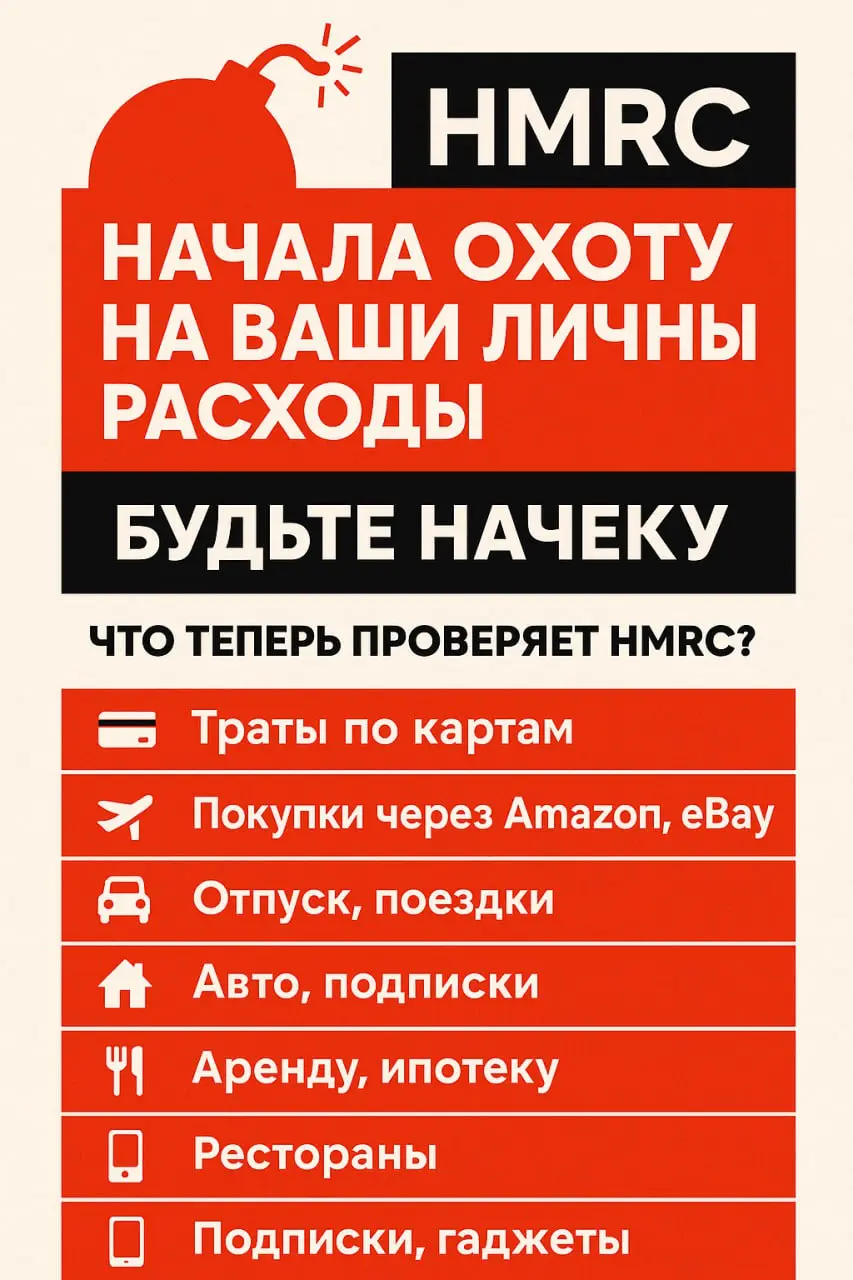
In 2025, HMRC (the UK tax authority) is shifting its focus to how you spend money, not just how much you earn. This means that tax inspectors will now compare your lifestyle with what you declare in your tax returns. If your spending doesn’t match your income, be ready to explain yourself.
Previously, HMRC focused on the income declared in tax returns. Now, the attention is shifting to “personal expenses“—from your trips, restaurants, and shopping to car maintenance and holidays.
💼 HMRC will be asking:
“If you declare an income of £15,000 per year, but you fly to Dubai and drive a Range Rover—where did the money come from?”
Here’s a list of what could come under scrutiny:
And if all this doesn’t match the income you’ve declared as a self-employed person, landlord, or company director, you can expect a letter from HMRC.
Yes. If you:
— then there’s nothing to worry about. But if you’ve been “playing” with the numbers, HMRC is now catching it faster than ever before.
📬 Consultation is free and without obligation.
The world of taxes has become digital, and now HMRC sees more than you think. The comparison of “how you live” and “what you declare” is the new reality of 2025.
💥 Don’t get caught. Check your finances now.
Soon, only officially registered providers—ACSPs (Authorised Corporate Service Providers)—will be able to file documents with Companies House.
This is part of the reform under the Economic Crime and Corporate Transparency Act, aimed at combating fraud and increasing business transparency in the UK.
Only organizations that have:
🔐 Mandatory Identification All directors, beneficiaries, and Persons with Significant Control (PSC) of a company will have to undergo an identity check. But if you work with us, you don’t have to do it yourself. As an ACSP, we can perform the identity verification for you.
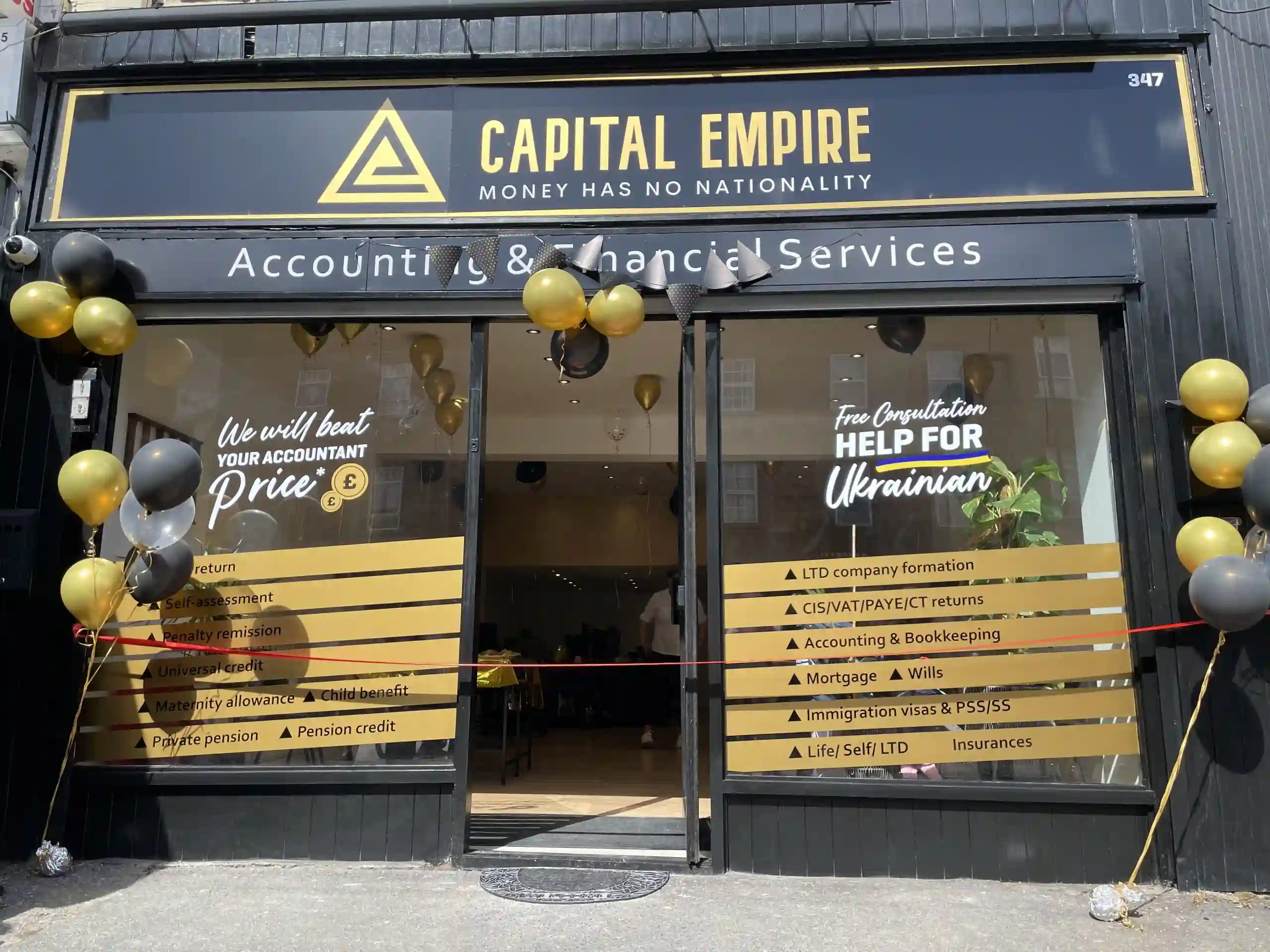
📑 Document Filing – Only through Authorised Providers Very soon, it will be impossible to register a new LTD company, file a Confirmation Statement, or change a director through a “regular accountant.” Such actions will be performed only by ACSPs. Capital Empire has already received this status and is listed in the register of authorised providers.
⚖️ Compliance with New Companies House Requirements We are officially accredited, have passed AML controls, and are authorised to act on behalf of clients. Your business with us operates legally, safely, and without the risk of documents being rejected.
Now, a business in the UK needs more than just an accountant. It needs an official representative that the state trusts. 📉 Without an ACSP, filing documents on behalf of a client will become impossible. ⚠️ Handling checks yourself can lead to errors, delays, and unnecessary bureaucracy. ✅ With us, you maintain peace of mind and confidence that everything is done correctly.
📲 Contact us to:
We handle all communication with Companies House and HMRC—you just focus on your business.

From August 1, 2025, citizens of the Republic of Moldova residing in the UK will be able to exchange their Moldovan driving licenses for British ones without needing to pass a theory or practical test. This is possible thanks to a Memorandum of Understanding between the UK and the Republic of Moldova.
To exchange your Moldovan driving license for a British one, you must meet several conditions:
Upon exchanging your Moldovan driving license for a British one, you’ll receive a British driving license that matches the type of license specified on your Moldovan license.
If you have questions or encounter difficulties during the exchange process, we can help you navigate all steps of the exchange without errors or delays.
📞 Contact us: +44 7555 858 858
📍 Our office: 347 Barking Road, London, E13 8EE

80% of women who contact us think they are NOT eligible for Maternity Allowance in the UK. But with our help, they receive £7300 from the state over 39 weeks. We’ve decided to debunk the most common myths and misconceptions about Maternity Allowance.
Myth 1: If I don’t work as an employee, I can’t get Maternity AllowanceTruth: This is far from the case. Maternity Allowance is available not only for those working on a contract (employee). If you work as a worker, or even if you are self-employed, you can still receive the benefit. If you can’t get Statutory Maternity Pay (maternity benefit from your employer), you are entitled to Maternity Allowance.
Myth 2: I have to work at least 26 weeks for one employer to get the benefitTruth: To be eligible for Maternity Allowance, you don’t need to work 26 weeks for one employer. You can get the benefit if you have worked for at least a few weeks, even if it was for different employers.
Myth 3: I won’t get the benefit if I don’t have extensive work experienceTruth: In fact, Maternity Allowance is available even if you don’t have many years of work experience. The main thing is to have a minimum number of weeks worked or income earned in the last 66 weeks before the start of pregnancy.
Myth 4: My income is too low to qualify for Maternity AllowanceTruth: If your income is low or unstable, it doesn’t mean you’re not eligible for the benefit. The program is designed to support women in various financial situations.
Myth 5: If I’ve been self-employed for only a few months, I can’t get the benefitTruth: Even if you’ve been self-employed for only a few months, you can still apply for Maternity Allowance if you meet certain requirements.
Myth 6: I won’t get the benefit if I didn’t apply before giving birthTruth: Although it’s recommended to apply for Maternity Allowance before giving birth, if you didn’t manage to do so, don’t worry. You can still apply after giving birth (up to 3 months), and the benefit will be paid for the entire period, starting from the application date.
We help women understand their situation and correctly complete their Maternity Allowance applications.
What we do:
📞 Contact us:

If you live in the UK and are raising children, various benefits and allowances may be available to you. Let’s look at the main ones.
One of the most important types of support is Maternity Allowance – a benefit paid to women during pregnancy and childbirth. The allowance amounts to about £7,300, and the duration of payments is 39 weeks. This benefit is intended for women who cannot receive Statutory Maternity Pay (maternity benefit from their employer), for example, if they are self-employed.
Child Benefit is a monthly payment for each child. In 2025, the allowance is approximately £1,350 per year for the first child and about £900 for each subsequent child. Child Benefit payments continue until the child reaches 16 years old, or up to 20 years if they remain in education.
Maternity Grant is a one-time payment of £500, provided for the first child under certain conditions. For example, this benefit is available to families receiving Universal Credit and not exceeding a certain income threshold. This is additional financial assistance that can help with preparations for the arrival of a child.
Universal Credit is a form of social support that includes various components. This benefit is designed to help with housing costs, childcare, and other family needs. Tax-Free Childcare helps parents cover childcare costs, such as nursery fees or a nanny. Parents can receive up to £2,000 per year per child (or £4,000 for two children). With this program, parental childcare expenses can be significantly reduced. Receiving one of these benefits excludes receiving another.
In the UK, parents can receive free childcare hours depending on their employment. If both parents work, they can get 30 free hours per week for children over three years old (from September 2025 – for children from 9 months old). For families with income up to a certain level, 15 free hours per week are available for children aged 2 to 3 years.
For families residing in London, discounted travel for children is provided through the Children Travel Oyster Card. This card allows children up to 18 years old to travel on public transport for free or at a significant discount.
For over 10 years, we’ve been helping families with the preparation and submission of applications for various benefits and allowances in the UK. If you need real assistance with document processing, application submission, and achieving results, we are ready to help you.
Our services include:
You can contact our office by phone: +44 7555 858 858 (also WhatsApp, Telegram)

(From September 2025 for Working Parents) For many parents in the UK, childcare for young children is one of the largest expenses. Good news: starting in September 2025, the UK’s free childcare hours program will significantly expand, potentially saving families hundreds of pounds per month and thousands per year.
Currently, free nursery hours are provided under different rules depending on the child’s age:
From September 2025:
This means that working parents of children aged 9 months to 3 years will be able to receive 30 free hours of childcare per week, instead of the current 15.
The service is available to parents who:
If the cost of an hour at nursery is around £10, then by increasing free hours from 15 to 30 per week for 38 weeks a year, your savings could be approximately £5,700 annually—a substantial boost to your family budget!
If you need help with applying, completing documents, or require a consultation, we’re always ready to assist! +44 7555 858 858 (WhatsApp / Telegram) Capital Empire

If you live and work in the UK, you should know about an important tool called the Personal Tax Account (PTA) – it’s a personal online tax cabinet where all information about your income, taxes, pension contributions, tax codes, and more is collected.
What is PTA? PTA is an online service from HMRC that allows you to see all your tax information in one place. It’s like online banking, but instead of money, it’s your tax and income data.
In the Personal Tax Account you can:
Why is it important to have a PTA?
Need help? If you are unsure how to register, check your Tax Code, or deal with taxes, we are ready to help.
📩 Message us, and we will support you every step of the way!
+44 7555 858 858 (WhatsApp / Telegram)

🛂 Skilled Worker Visa Reforms
Higher Skills Threshold: The minimum skill level for Skilled Worker visas will rise from RQF Level 3 (A-level equivalent) to RQF Level 6 (degree level), affecting roles in sectors like hospitality, construction, and social care.
Salary Threshold Increase: Salary thresholds for visa eligibility will be raised, with the Immigration Salary List being replaced by a Temporary Shortage List (TSL) for specific sectors demonstrating genuine shortages.
Social Care Visa Closure: The route for recruiting overseas social care workers will be phased out by 2028, with no new care worker visas issued.
🎓 Student and Graduate Visa Changes
Graduate Visa Duration Reduction: The post-study work visa duration for international graduates will be reduced from two years to 18 months.
Increased Compliance for Educational Institutions: Stricter compliance measures will be introduced for institutions sponsoring international students, including higher pass marks and mandatory participation in the Agent Quality Framework.
🏠 Settlement and Citizenship
Extended Residency Requirement: The qualifying period for Indefinite Leave to Remain (ILR) and citizenship will increase from five to ten years, with potential fast-track options for individuals making significant contributions to the UK.
Enhanced English Language Requirements: English proficiency standards will be raised for both main applicants and their dependants across various visa routes.
👨👩👧👦 Family Migration Reforms
Stricter Eligibility Criteria: New rules will enforce clear relationship requirements, financial thresholds, and English language skills for family visa applicants to ensure genuine relationships and better integration.
Article 8 Legislation: Legislation will be introduced to limit the application of Article 8 of the Human Rights Act 1998 in asylum cases, aiming to reduce misuse of human rights claims.
💼 Employer and Workforce Planning
Labour Market Evidence Group (LMEG): A new body will assess labour shortages and ensure that immigration is not used as a substitute for domestic workforce development.
Increased Immigration Skills Charge: The Immigration Skills Charge will rise by 32%, with funds directed towards domestic training initiatives.
📊 Border Control and Compliance
Digital Immigration System: The introduction of eVisas and Electronic Travel Authorisations (ETAs) will enhance border security and compliance monitoring.
Expanded Deportation Powers: The Home Office will have increased authority to revoke visas for a broader range of offences, including those not resulting in imprisonment.
These proposals are currently under consultation, with some changes expected to be implemented in 2026. Employers and individuals are advised to stay informed and prepare for the forthcoming adjustments to the UK immigration system.